


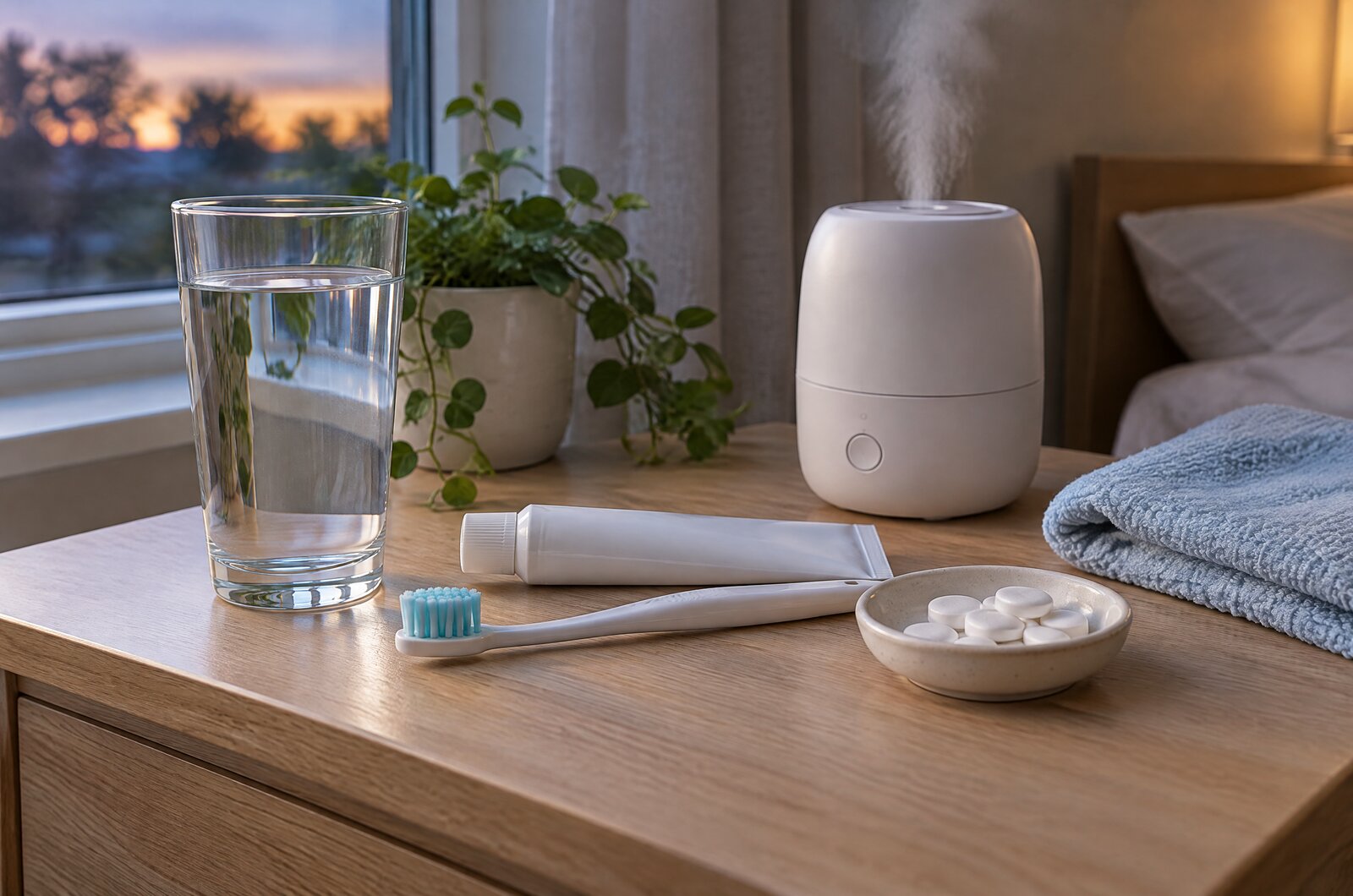
Top image: AI-generated illustration.
If a medicine has left your mouth feeling dry and you want to protect your teeth, this guide from Absolute Smiles in Bassendean explains why it matters, what to tell your doctor and dentist, and what helps.
Absolute Smiles practice notes:
- Absolute Smiles offers scale and clean appointments in Bassendean.
- Absolute Smiles lists Dr Sandeep Sharma as its Principal Dentist.
You started a new tablet a few weeks ago, and now your mouth feels dry most of the time. Your tongue sticks to the roof of your mouth, you’re sipping water all day, and you’ve started to wonder whether this could be bad for your teeth. It’s a fair question, and the answer is yes, it’s worth mentioning to your dentist.
Here’s the short answer. Healthdirect says dry mouth syndrome can be a side effect of medicines including antidepressants, antihistamines, decongestants, blood pressure medicines, painkillers and diuretics. It also says that if a medicine is causing your dry mouth, do not make any changes to your doses without first talking with your doctor. Your dentist at Absolute Smiles in Bassendean can check your teeth and gums and help you protect them while you and your doctor work out the cause.
Contents
- 1 Summary of the Content
- 2 What Is Dry Mouth?
- 3 Which Medicines Can Cause a Dry Mouth?
- 4 Should You Stop the Medicine?
- 5 What Signs Should You Look Out For?
- 6 How Does a Dry Mouth Affect Your Teeth?
- 7 How Can You Protect Your Teeth With a Dry Mouth?
- 8 Everyday Tips to Ease a Dry Mouth
- 9 What to Tell the Team at Absolute Smiles
- 10 Booking at Absolute Smiles
- 11 Frequently Asked Questions
- 12 Final Thoughts
- 13 Sources
Summary of the Content
- Dry mouth (xerostomia) means your body isn’t making enough saliva, and many common medicines can cause it.
- Saliva helps protect your teeth from decay, so a dry mouth raises the risk of tooth decay and gum disease.
- Never stop or change a medicine yourself; talk to your doctor first.
- Simple steps help: sip water, chew sugar-free gum, use a humidifier and use a higher fluoride toothpaste.
- See your dentist regularly so problems are found early, and tell the team about every medicine you take.
What Is Dry Mouth?
Healthdirect explains that dry mouth syndrome, also called xerostomia, happens when your body stops making enough saliva. It often develops gradually and can range from mild to severe. About 1 in 3 adults report having a dry mouth at some point in their lives.
The Australian Dental Association (ADA) adds a useful point: a dry mouth is a symptom, something that is felt, and it is not always due to the glands that make saliva not working properly.
Why saliva matters for your teeth
Healthdirect lists what saliva does. It helps to:
- keep your mouth and throat moist
- lubricate your mouth to assist with speech
- help with swallowing and digestion
- protect your teeth from decay
That last one is why your dentist cares about a dry mouth.
Which Medicines Can Cause a Dry Mouth?
Healthdirect lists these among the medicines that can have dry mouth as a side effect:
| Type of medicine | Examples healthdirect lists |
|---|---|
| Mood and mental health | Antidepressants |
| Allergy and cold | Antihistamines and decongestants |
| Heart and blood pressure | Blood pressure medicines and diuretics |
| Pain | Painkillers or opioids |
| Treatment for cancer | Chemotherapy or radiotherapy |
The ADA also lists dry mouth as a side effect of many medicines, and names other causes: dehydration, smoking, drinking lots of alcohol, tea or coffee, and health problems such as Sjögren’s syndrome and type 2 diabetes. It notes the cause is sometimes not known.
This table isn’t a list of medicines to avoid. It’s a prompt to tell your dentist and doctor what you take, so they can see the whole picture.
Should You Stop the Medicine?
No, not on your own. This is the most important point in the whole article.
Healthdirect says that if a medicine is causing your dry mouth, do not make any changes to your doses without first talking with your doctor. Your doctor may suggest stopping or swapping your medicine. The ADA says the same thing: never make medicine changes all by yourself, and changing the way you take medicines should only be done with your doctor’s advice.
What you can do is bring it up. The ADA suggests checking the list of medicines, vitamins and other supplements you are taking, and talking to your doctor about whether you can try taking a smaller amount of any medicine that’s making your mouth dry. Healthdirect adds that your doctor may prescribe a medicine to stimulate the salivary glands to produce saliva.
What Signs Should You Look Out For?
Healthdirect lists the problems dry mouth syndrome can cause:
- a rough or dry tongue, which may stick to the roof of your mouth or lips
- dry and cracked lips that stick to your gums
- mouth ulcers, bleeding gums or oral thrush infections
- bad breath
- difficulties with speaking, eating, chewing or swallowing your food
- tooth decay
- saliva that feels thick or stringy
It suggests seeing your doctor if your mouth feels dry and it bothers you, or if you notice other symptoms that reduce your quality of life. Your doctor may refer you to a dentist if they notice complications of dry mouth.
How Does a Dry Mouth Affect Your Teeth?
Healthdirect says dry mouth syndrome greatly increases your chance of developing tooth decay or gum disease, and that it is very important to see your dentist regularly so any complications are found early. The ADA puts it plainly: tooth decay can develop faster in a dry mouth.
The good news is that both bodies set out practical ways to protect your teeth.
How Can You Protect Your Teeth With a Dry Mouth?
These steps come from healthdirect and the ADA:
- Brush gently, with the right toothpaste. The ADA suggests gently brushing your teeth after meals and using a high fluoride toothpaste for extra protection. It notes high fluoride toothpaste can be bought from a pharmacy and some dental clinics, not from the supermarket. Healthdirect suggests a soft toothbrush and avoiding toothpastes that cause a burning sensation in your mouth.
- Clean between your teeth every day. The ADA says this takes away the food and bacteria your toothbrush cannot reach.
- Cut back on sugar. Avoid sticky, sugary foods and drinks, says the ADA. Healthdirect also suggests avoiding sugary or acidic foods.
- Keep up your check-ups. The ADA says people with a dry mouth may need to visit the dentist more often, so decay is found before it gets too bad.
- Ask about saliva substitutes. Both healthdirect and the ADA mention artificial saliva products. The ADA says these can include gels, mouthwashes, mouth sprays and toothpastes.
Everyday Tips to Ease a Dry Mouth
Here’s a simple checklist of the comfort steps healthdirect and the ADA suggest. Pick the ones that suit you:
- Sip water through the day, and sip water as you eat.
- Choose water over sugary drinks, fruit juice or cordial.
- Chew sugar-free gum to get saliva flowing. The ADA notes some contain xylitol, and that gum might not suit you if you have jaw pain.
- Try dry mouth lozenges that contain xylitol, rather than sugary lollies.
- Drink less coffee and tea.
- Use sauces to moisten foods and choose soups for meals.
- Avoid foods that irritate a dry mouth, such as citrus, spicy foods, or foods with sharp edges like crackers or chips.
- Breathe through your nose rather than your mouth where you can.
- Use a humidifier in your bedroom at night.
- Use moisturiser on your lips.
- Avoid smoking and alcohol, which can make dry mouth worse.
- If you wear dentures, take them out every night and keep them clean.
What to Tell the Team at Absolute Smiles
The most useful thing you can bring to your appointment is a complete list. The ADA’s guidance on medical history asks for all current and previous medications, including any vitamins, minerals, supplements, or medications bought without a doctor’s prescription. If your medical history is complicated, it suggests bringing a copy from your doctor.
At Absolute Smiles, a first visit usually starts with a chat about your concerns and medical history, then an examination of your teeth, gums and mouth. X-rays come up if the dentist needs a closer look. You’ll hear what was found and what your options are before anything is booked in.
Questions to ask your dentist
- Could my dry mouth be linked to a medicine I take?
- Are there early signs of decay or gum problems?
- Should I use a higher fluoride toothpaste, and where can I get one?
- How often should I come in for a check-up?
- Would a saliva substitute help me?
Booking at Absolute Smiles
Absolute Smiles is at 1 Old Perth Road, Bassendean. It’s open Monday, Wednesday, Thursday and Friday from 8:00 AM to 5:00 PM, Tuesday from 8:00 AM to 7:00 PM, and Saturday from 8:00 AM to 1:00 PM.
Bring your medicines list, your health fund card and any letters from your doctor. Call 08 9279 7956 or contact the clinic. If you’re not sure what to say, try: “I’ve had a dry mouth since starting a new medicine. Can I book a check-up so the dentist can look at my teeth?”
Frequently Asked Questions
Will a dry mouth from medicine go away?
It depends on the cause. Healthdirect says the best way to treat dry mouth syndrome is to treat the cause, and your doctor may suggest stopping or swapping a medicine. Don’t change anything without your doctor’s advice.
Can dry mouth cause bad breath?
Yes. Healthdirect lists bad breath among the problems dry mouth syndrome can cause, along with mouth ulcers, bleeding gums and oral thrush.
Should I see my doctor or my dentist?
Both can help. Healthdirect suggests seeing your doctor if your dry mouth bothers you, and seeing your dentist regularly so complications are found early. Tell each of them what the other has said.
Final Thoughts
A dry mouth is common, and many everyday medicines can cause it. It matters for your teeth because saliva helps protect them from decay. The key steps are simple: keep taking your medicines as prescribed and talk to your doctor before changing anything, protect your teeth with fluoride and good cleaning, and see your dentist regularly. Bring your full medicines list to every visit so the team can look after you properly.
Sources
Checked 30 October 2026. This article explains general published guidance, not advice about your own medicines or health.
- Healthdirect: Dry mouth syndrome (last reviewed October 2023).
- Australian Dental Association: Dry mouth and Why do I have to tell my medical history to my dentist?
- Absolute Smiles: Choosing a dentist in Bassendean, Scale and clean, Dr Sandeep Sharma and Contact us.
- Photos in this article are AI-generated illustrations, not photos of Absolute Smiles, its staff or patients.
General health disclaimer: This article is general information only. Talk to your doctor before changing any medicine, and see your dentist about your own teeth and gums.


