


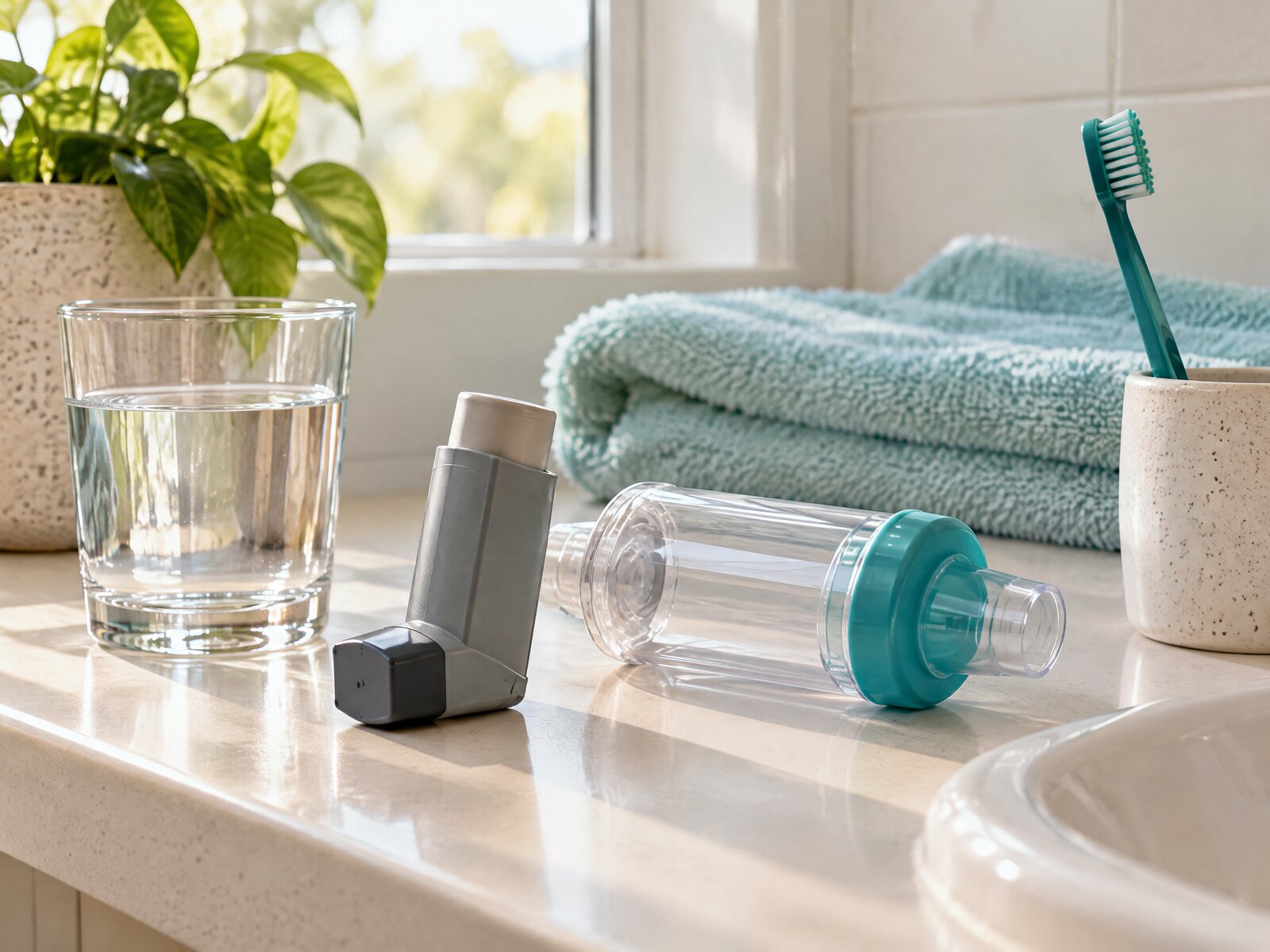
If you use an asthma inhaler and have noticed a dry, sore or unusual feeling in your mouth, tell your dentist. This guide from Absolute Smiles in Bassendean explains the mouth-care questions to raise while keeping your asthma care with your doctor.
Absolute Smiles practice notes:
- Absolute Smiles provides scale and clean appointments in Bassendean.
- The clinic lists Dr Sandeep Sharma as its Principal Dentist.
An inhaler can be such a familiar part of your day that you do not think to put it on a dental form. You may also wonder whether a sore tongue means the inhaler needs changing. Start by telling the dental team what you use and what has changed, rather than making a change yourself.
The Australian Dental Association links asthma and its medicines with dry mouth and a greater risk of some mouth problems, including oral thrush. Tell your dentist you use an inhaler and ask about your routine. Absolute Smiles offers general dental care and scale and clean appointments in Bassendean.
Contents
- 1 Summary of the content
- 2 Why can asthma matter to your teeth and mouth?
- 3 Should you stop an inhaler if your mouth feels sore?
- 4 What is the difference between rinsing and brushing afterwards?
- 5 Does everyone with an inhaler need a spacer?
- 6 What mouth changes should you mention?
- 7 Your inhaler-and-mouth appointment checklist
- 8 What can you discuss at Absolute Smiles?
- 9 Sources
Summary of the content
- Include inhalers on your dental medicine list, even if you do not take tablets.
- Ask your doctor or pharmacist to check the technique for your own inhaler and whether a spacer is relevant.
- Discuss rinsing after an inhaler and the timing of toothbrushing with your dentist.
- Arrange an assessment for mouth changes rather than diagnosing oral thrush from a photograph.
- Keep following your prescribed asthma care; do not change a medicine because of a dental article.
Why can asthma matter to your teeth and mouth?
Asthma belongs in your dental history because both the condition and the medicines used for it can affect the mouth. The ADA’s asthma and oral-health guidance, checked in November 2026, describes dry mouth as an important reason people with asthma may be at greater risk of tooth decay, tooth erosion, gum disease and oral thrush.
The ADA identifies breathing through the mouth and medicine side effects as possible contributors to reduced saliva. It does not mean every person with asthma will develop these problems. You need an assessment of your own symptoms and teeth, rather than assuming that using an inhaler establishes a diagnosis.
The first useful detail is what has changed for you. Does your mouth feel sticky in the morning? Have you noticed a burning feeling or patches on your tongue? Write down when the change began and bring that information to the appointment. If you use several medicines, list all of them instead of deciding in advance which one matters.
Should you stop an inhaler if your mouth feels sore?
Do not change your asthma treatment on the strength of a mouth symptom or this article. The Victorian Department of Health’s Better Health Channel asthma guidance gives this instruction: Use your medications as instructed by your GP, even when you feel well.
Talk to your doctor about concerns with your asthma medicines.
Keep the two questions separate: your doctor manages your asthma treatment, while a dental assessment looks at your teeth, gums and mouth. Better Health Channel also recommends checking inhaler technique and following your written asthma action plan. A mouth-care routine should fit alongside that plan, not replace it.
You can say to your doctor or pharmacist: “My mouth has started feeling different and I use this inhaler. Could we check how I am using it and what I should do afterwards?” Bring the actual device or its current name so the advice relates to your inhaler, rather than the colour of someone else’s.
What is the difference between rinsing and brushing afterwards?
Rinsing and brushing are different steps. The ADA advises rinsing your mouth with water or a fluoridated mouthwash after using an asthma inhaler. Its tooth-erosion advice also says to wait at least 60 minutes after inhaler use before brushing. That timing is general guidance from the ADA, not a reason to delay necessary asthma medicine.
Ask the dentist how to fit that advice around your own routine. For example, if you usually take an inhaler immediately before bed and then brush your teeth, describe that sequence. Ask how to arrange the mouth-care steps without changing the medicine schedule set by your doctor.
Do not assume that every mouthwash on the shelf is needed. If you are unsure about a product, take its name to the appointment and ask what is appropriate for your mouth. A discussion about water, toothbrushing and your usual products is more useful than adding several new products at once without advice.
Does everyone with an inhaler need a spacer?
Ask about the device you actually use rather than assuming a spacer fits every inhaler. Better Health Channel advises correct inhaler use, including a spacer and mask where required. The ADA describes a spacer as a way to help medicine reach the lungs instead of settling on the teeth and tissues of the mouth and throat.
Asthma Australia recommends a technique check with a doctor, asthma nurse or pharmacist, because different inhaler devices have different steps.
Ask your doctor or pharmacist to check your own device and technique. The photograph in this article is an illustration, not a demonstration of which devices can be connected or how to use them. Do not use a picture to decide compatibility or replace the instructions you have been given.
| Your question | Who to ask and what to bring |
|---|---|
| Could my asthma treatment need review? | Speak to your GP; bring your medicine list and asthma action plan. |
| Am I using this inhaler correctly? | Ask your doctor or pharmacist to check the actual device and its instructions. |
| What is happening in my mouth? | Tell your dentist about the symptoms, inhaler and other medicines. |
| How should I arrange my daily mouth care? | Discuss rinsing, brushing and any dryness products with your dentist. |
What mouth changes should you mention?
Mention persistent dryness, soreness or changes you can see, including white patches. The ADA describes oral thrush as a fungal infection that can affect the mouth and throat, and links it with some inhaled asthma medicines. It describes white patches that may leave a red area underneath. These features are a reason to seek assessment, not a way to diagnose yourself.
Tell the dentist where the change is, when it started and whether it affects eating or speaking. Ask what assessment is needed and whether you should also speak to your doctor. This article does not recommend an antifungal product or assume that a sore mouth is thrush.
If dryness is the main concern, our article about dry mouth from medicines gives broader appointment-preparation questions. This inhaler guide has a narrower purpose: checking the device-related routine and making sure your asthma treatment is included in your dental history.
A breathing emergency is different from a dental appointment question. Better Health Channel says to call 000 for an ambulance in an asthma emergency, including very difficult breathing, inability to speak in sentences, blue lips, rapidly worsening symptoms or little or no relief from the reliever. Do not wait for a dental booking or website reply.
Your inhaler-and-mouth appointment checklist
You do not need to work out the cause before you call. Bring enough detail for the conversation to start with your circumstances.
- Write down the name of each inhaler and how you have been instructed to use it.
- List other prescribed and non-prescription medicines, vitamins and supplements.
- Bring your current asthma action plan if you have one.
- Note when any dryness, soreness or mouth changes began and whether anything changed around that time.
- Write down the mouth-care products you already use and when you brush in relation to the inhaler.
- Bring questions about technique or a spacer to your doctor or pharmacist.
- Tell the dental team about allergies, recent hospital care and any worries about the appointment.
The ADA’s medical-history guidance explicitly includes inhaled medicines, as well as medicines bought without a prescription, allergies, medical conditions and recent hospital care. Update the list when something changes, even if your inhaler was prescribed years ago.
What can you discuss at Absolute Smiles?
Begin with an assessment of your concerns, not a request for a particular treatment. Our live guide to choosing a dentist in Bassendean describes a first visit as a conversation about your concerns and medical history, followed by an examination of your teeth, gums and mouth. X-rays may be discussed if a closer look is needed.
Absolute Smiles provides general dental care and scale and clean appointments. Whether you need a clean, another form of care or advice from another health professional depends on the findings. Ask the dentist to explain the options and proposed costs before you agree to treatment.
- Explain the mouth change and tell the dentist about your asthma and medicines.
- Ask what the examination shows and which questions also belong with your GP or pharmacist.
- Before leaving, clarify the mouth-care steps, any proposed treatment and when to seek further advice.
Call (08) 9279 7956 or use our contact page. The clinic is at 1 Old Perth Road, Bassendean. You can say: “I use an asthma inhaler and have noticed a change in my mouth. I would like a dental assessment and advice about my mouth-care routine.”
By Dr Sandeep Sharma, Principal Dentist, Absolute Smiles.
Sources
Sources checked 2 November 2026. General published guidance, not personal dental or asthma advice.
- Australian Dental Association: Asthma and medical history; no publication dates displayed on the inspected pages. Independently written factual discussion, no ADA artwork reproduced.
- Victorian Department of Health, Better Health Channel: Asthma, management and emergency sections. One short unchanged quotation. Reference: www.betterhealth.vic.gov.au.
- Absolute Smiles: first-visit context, general dentistry, scale and clean, Dr Sandeep Sharma and contact details.
General health disclaimer: This article is general information only. Speak to your doctor about asthma treatment and your dentist about your own teeth and mouth.


